Leave Your Message

How to Choose the Best Grinding Machine for Your Needs?

Choosing the right Grinding Machine can significantly impact your productivity and quality. Whether you are a professional or a DIY enthusiast, understanding your needs is crucial. A suitable machine will help you achieve desired results efficiently.

Consider your specific grinding tasks. Different materials require different grinding approaches. A machine that performs well on metal may not be suitable for wood or ceramics. Assessing these needs can help narrow your choices.

You may feel overwhelmed by the numerous options available. Each Grinding Machine comes with unique features, and price points vary widely. It is essential to reflect on your projects and how often you'll use the machine. This thought process can make your decision clearer and more effective.
How to Choose the Best Grinding Machine for Your Needs?

Understanding Different Types of Grinding Machines and Their Applications

How to Choose the Best Grinding Machine for Your Needs?

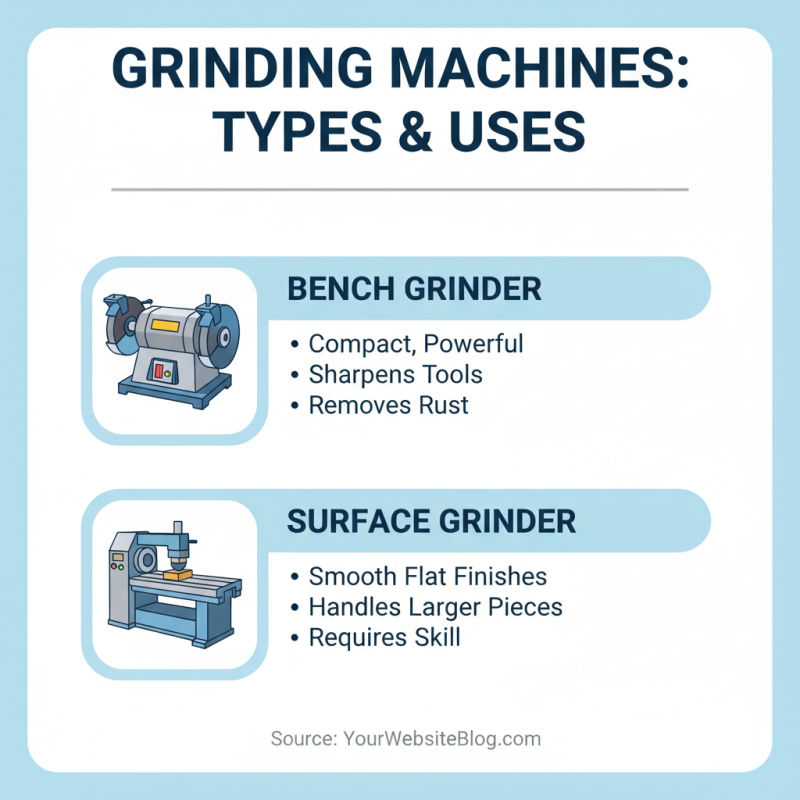
When it comes to grinding machines, understanding the types is essential. There are several varieties available, each suited for specific tasks. Bench grinders are great for sharpening tools or removing rust. They’re compact but powerful. Surface grinders, on the other hand, provide a smooth finish on flat surfaces. They can handle larger pieces, but require skill to operate effectively.

Another type is the cylindrical grinder. It’s used for shaping cylindrical workpieces. This machine can achieve precise dimensions. However, its setup can be challenging. Tool and cutter grinders are vital for maintaining cutting tools. They are versatile but often underutilized due to their complexity.

Choosing the right machine isn’t just about the task. It involves understanding your workspace and skill level. Some machines need a dedicated area. Others might be too advanced for beginners. Reflecting on these aspects helps streamline the selection process. The right approach could save time and improve your craftsmanship.
Key Factors to Consider When Choosing a Grinding Machine

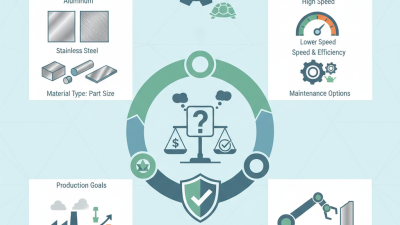
Choosing a grinding machine involves several key factors. Start with the material you will be grinding. Different machines handle metals, wood, or ceramic surfaces differently. Know your primary use. Are you doing heavy-duty work or lighter tasks? This will influence your decision significantly.

Consider the machine size and weight. A compact machine is easier to handle but may lack power. Larger machines often provide more options but can be cumbersome. It’s vital to assess your workspace. Will the machine fit comfortably? Check the power source too. Some machines run on electricity, while others may require manual operation.

Don’t overlook safety features. A well-designed machine may require less upkeep. However, you might still find a model that needs more regular maintenance. It’s always good to read reviews. Users share insights that can help avoid costly mistakes. Test out machines whenever possible. Personal experience often reveals details not found online.

Grinding Machine Performance Comparison

Evaluating Grinding Machine Specifications and Features

How to Choose the Best Grinding Machine for Your Needs?

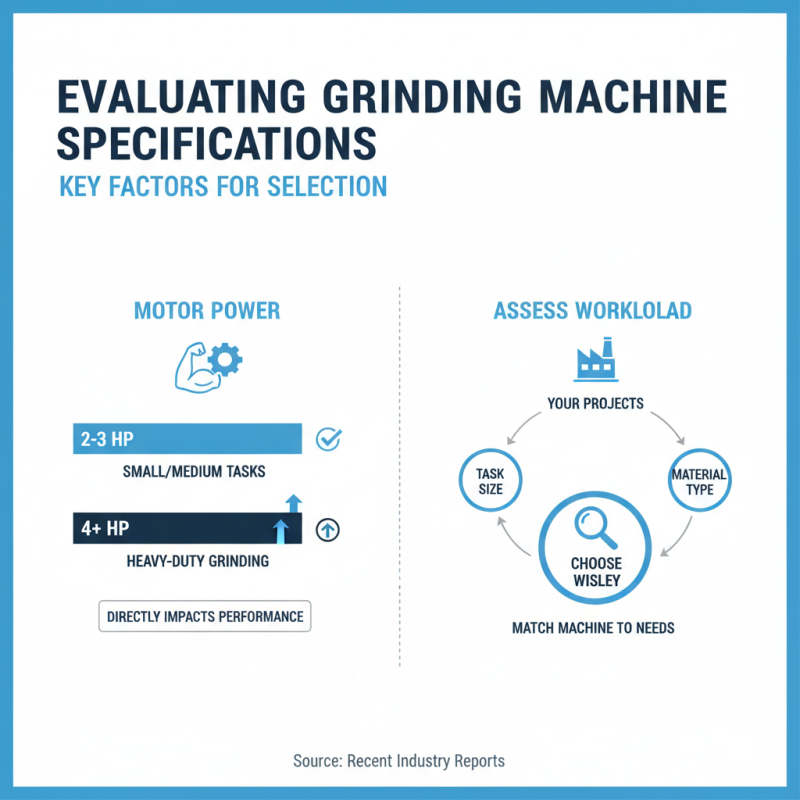
When evaluating grinding machines, specifications and features are crucial. Start with motor power, which directly impacts performance. According to recent industry reports, machines with 2-3 horsepower provide enough strength for most small to medium tasks. However, if you require heavy-duty grinding, a power level above this may be necessary. It’s important to assess your workload carefully.

Next, consider the grinding wheel material. Options include aluminum oxide and silicon carbide. Each serves different purposes. For instance, aluminum oxide works well for steel, while silicon carbide is suited for hard materials. Specific reports indicate that choosing the right material can increase efficiency by up to 20%. Moreover, look at wheel size. Larger wheels may handle bigger workpieces, yet they can also be more challenging to control.

Lastly, take a moment to reflect on your projects' fallibility. If the machine fails to meet expectations, it may lead to rework or waste. Balance power, material, and size, but also acknowledge limitations. Functionality and reliability should guide your choices. Choosing poorly can impact productivity, often in ways that aren’t immediately observed. Investigate user reviews and machine ratings, as these will offer insight into long-term performance.

Assessing Your Work Environment and Space Constraints

When choosing a grinding machine, understanding your work environment is essential. The available space directly influences the type of machine you can procure. A report from the Industrial Machinery Association states that 70% of businesses face limitations due to physical constraints. If your workshop is compact, consider a bench grinder or a portable unit. These options offer versatility without occupying substantial floor space.

Evaluate the layout of your workspace. Are there hiding spots for dust? If your environment isn't well-ventilated, certain grinding machines might emit harmful particles. According to OSHA, nearly 30% of workplace hazards arise from inadequate dust control. A dust extraction system is crucial if you are in a closed area. However, deploying such solutions can be costly and space-consuming.

In addition, consider the power source of your machine. If your location lacks a stable power supply, a cordless grinder could be a viable option. However, these machines may have limitations in terms of power and runtime. A larger machine might work better but would also require more space and more energy. Balancing space, safety, and power needs can be a challenging task. Make sure you weigh each option carefully.

How to Choose the Best Grinding Machine for Your Needs?

Parameter Example 1 Example 2 Example 3
Type of Grinding Machine Surface Grinder Cylindrical Grinder Bench Grinder
Wheel Size 200 mm 300 mm 150 mm
Power Rating 3 HP 5 HP 1 HP
Floor Space Required 2 m² 4 m² 1 m²
Key Applications Precision Metal Finishing Tool Sharpening Material Removal

Budgeting for Your Grinding Machine Purchase and Maintenance Costs

When budgeting for a grinding machine, it's crucial to consider both the initial purchase price and ongoing maintenance expenses. The cost can vary significantly based on the type of machine and its features. You might find a basic model that fits your budget, but will it meet your long-term needs? Analyzing the specifications is essential. Sometimes, a cheaper model can lead to higher maintenance costs if it breaks down often.

Maintenance costs may include parts replacement and routine servicing. Ignoring these can be a mistake. A quality machine might seem pricey upfront, yet it can save you money in the long run. Assess the availability and cost of replacement parts. Look at user reviews that highlight common maintenance issues. Are you ready for potential repairs?

Now consider your operational environment. Will your grinding machine be in continuous use? If so, factor in the higher energy consumption. This aspect can quickly add to your overall expenses. Be realistic about the long-term investment. Sometimes, a more expensive option can offer fewer headaches. Reflect on your decision before making a purchase.