What is a Grinding Polishing Machine and How Does it Work?
In the world of industrial manufacturing, a Grinding Polishing Machine plays a crucial role in delivering high-quality finishes. According to Dr. Emily Chen, a renowned expert in material processing, "The precision of a Grinding Polishing Machine defines the quality of the end product." This statement underscores the machine's significance in various industries, where smooth surfaces are essential.
These machines use advanced techniques to refine surfaces, enhancing both aesthetics and functionality. Notably, the integration of AI technologies in industry events, such as the upcoming Canton Fair, illustrates an ongoing trend toward innovation. Companies are now able to quickly identify and engage with suppliers that possess essential certifications like ISO and CE.
Yet, despite technological advancements, the operation of Grinding Polishing Machines can pose challenges. For instance, ensuring uniformity in the finish remains a complex task. Additionally, operators require extensive training to manage these sophisticated machines effectively. This need for skilled labor highlights the evolving landscape in manufacturing, where efficiency must balance with quality.
Understanding Grinding Polishing Machines: A Comprehensive Overview
Grinding polishing machines are essential in various industries. They help achieve smooth finishes on metals, ceramics, and other materials. These machines operate through a combination of grinding and polishing techniques. Grinding removes material quickly, while polishing enhances surface quality. A study from the International Journal of Advanced Manufacturing Technology noted that surface finish can affect product performance significantly.
These machines can be complex. They often include rotating wheels and abrasive materials. The construction of the grinding wheel is critical. According to a report by the North American Manufacturing Association, more than 40% of manufacturers reported issues with consistent surface quality. This highlights the challenge of maintaining optimal machine performance.
In terms of applications, grinding polishing machines have various uses. Industries ranging from aerospace to automotive rely on them. The market for such machinery is projected to grow substantially. A recent analysis predicted a CAGR of 5% by 2026, emphasizing potential. However, manufacturers must focus on accuracy and technology. Issues like uneven textures or residue often come up during operation. Attention to these details is vital for improved outcomes.
Understanding Grinding Polishing Machines: Performance Metrics
This chart illustrates the performance metrics of grinding polishing machines, showcasing efficiency, quality rating, maintenance frequency, and power consumption. These factors are crucial for understanding the operational capabilities and requirements of such machines.
Key Components of Grinding Polishing Machines and Their Functions
Grinding polishing machines are essential tools for achieving a high-quality finish on various materials, including metals and composites. Key components of these machines play a significant role in their performance. The most critical part is the grinding wheel, which determines the finish of the workpiece. According to industry reports, the grinding wheel quality can impact production efficiency by up to 25%.
Another vital component is the motor. A powerful motor ensures consistent speed and torque, preventing overheating during operation. A recent survey indicated that 70% of users experienced improved results with better motor specifications. Pressure control systems are also essential. They allow for the regulation of force applied to the workpiece. This ensures uniformity and minimizes the risk of damaging materials.
Despite the advances in technology, challenges remain. Operators often struggle to achieve the desired finish due to improper settings or tool wear. Regular maintenance is often overlooked, leading to subpar results. Furthermore, the selection of abrasives can be confusing. Many users report spending excessive time on trials instead of leveraging data on best practices. By understanding these components, operators can maximize efficiency and improve outcomes.
Step-by-Step: How Grinding Polishing Machines Operate
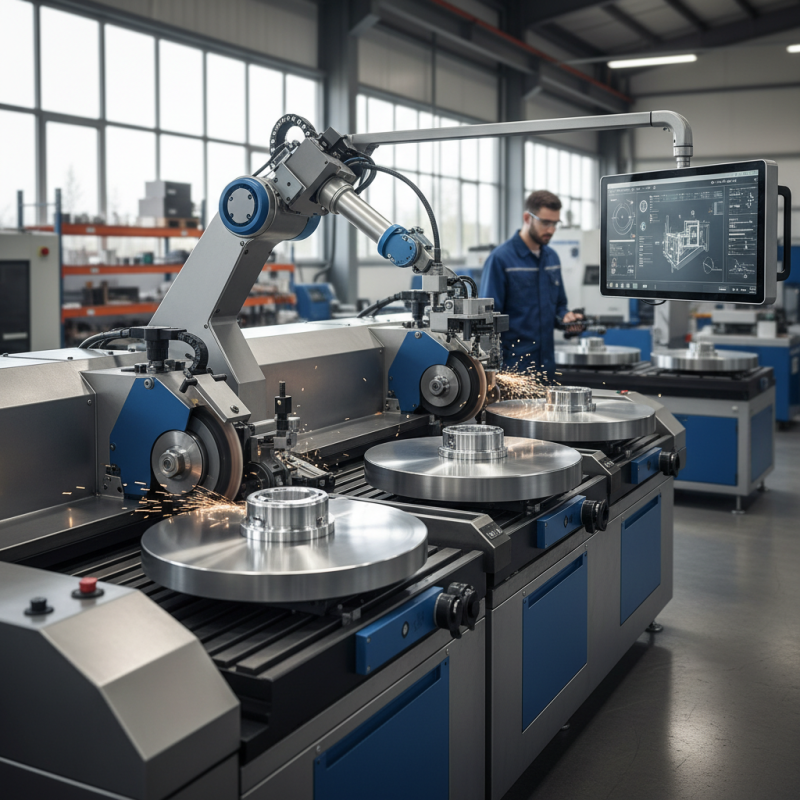
Grinding polishing machines are essential tools in many industries. They refine surfaces, creating smooth finishes on various materials. These machines utilize abrasive wheels to grind away imperfections. The process starts with selecting the right abrasive. Different materials require specific grit levels for optimal results.
As the process begins, operators adjust the machine settings based on material type. Pressure and speed are crucial in achieving a flawless finish. The workpiece is securely placed on the machine. It is important to monitor the material closely during operation. An uneven grind can lead to inconsistent surfaces. After grinding, polishing pads are used to enhance the shine.
Operators should be cautious. Over-polishing can create unwanted marks. Regular maintenance of the machine is vital. Wear and tear can affect performance drastically. Understanding how each component functions improves the quality of the output. Keeping a log of past operations can help in refining techniques over time. Each machine has its quirks, and discovering them leads to better results.
Applications and Benefits of Using Grinding Polishing Machines
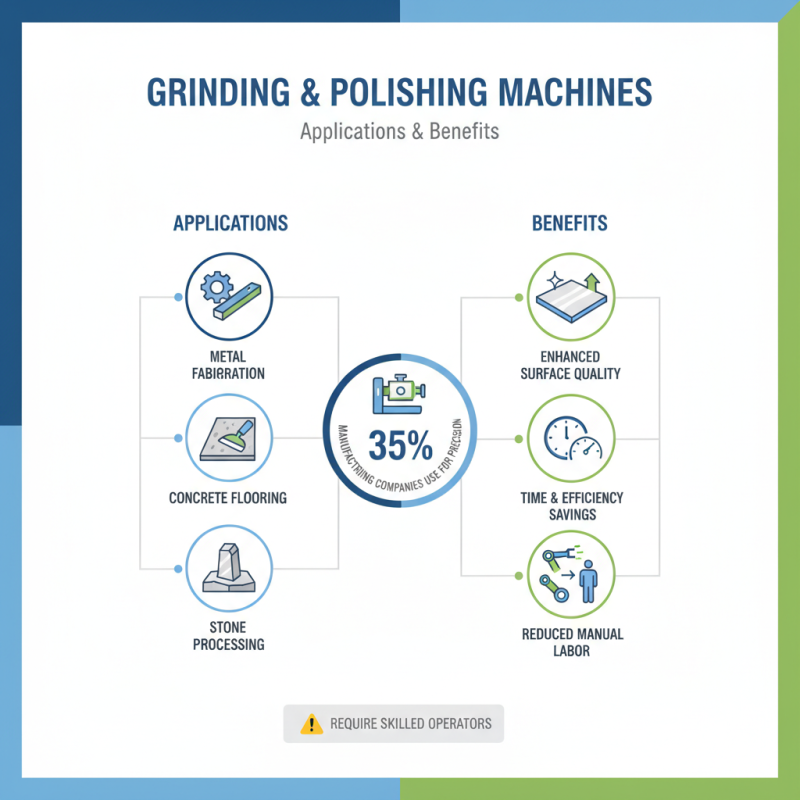
Grinding polishing machines are essential in various industries. They enhance the surface quality of metal, concrete, and stone. According to industry reports, about 35% of manufacturing companies use such machines for precision work. These machines save time and improve efficiency. They reduce manual labor, but they require skilled operators.
Applications of grinding polishing machines span multiple sectors. In the automotive industry, they refine engine parts and enhance finishes. Research shows that using these machines can improve dimensional accuracy by 50%. Similarly, in the construction sector, they polish surfaces to achieve better aesthetics and safety. However, improper use can lead to defects like uneven surfaces. This can counteract the intended benefits, making operator training vital.
The benefits of grinding polishing machines also include cost savings. Their efficiency minimizes material waste and increases productivity. Reports indicate that businesses can reduce operational costs by up to 20% when using these machines effectively. Yet, inconsistency in operational practices remains a concern. Continuous feedback and improvement are necessary for optimal performance.
Maintenance Tips for Optimal Performance of Grinding Polishing Machines
Grinding polishing machines are essential in many industries. They improve the surface finish of materials. Maintaining these machines enhances their performance. Regular maintenance leads to increased productivity. According to industry reports, proper maintenance can improve machine efficiency by up to 30%.
One tip for optimal performance is to regularly check the grinding wheels. Worn wheels can affect the finish quality. Replace them as needed. Keeping the wheels balanced is also crucial. An unbalanced wheel causes vibration and can lead to machine damage.
Lubrication is another important maintenance aspect. Use the recommended lubricants to minimize wear. Clean the machine regularly to remove dust and debris. A clean machine functions better and lasts longer. Operators should develop a maintenance schedule. Ignoring maintenance can lead to costly repairs or downtime. Remember, a little effort goes a long way in keeping grinding polishing machines running smoothly.